
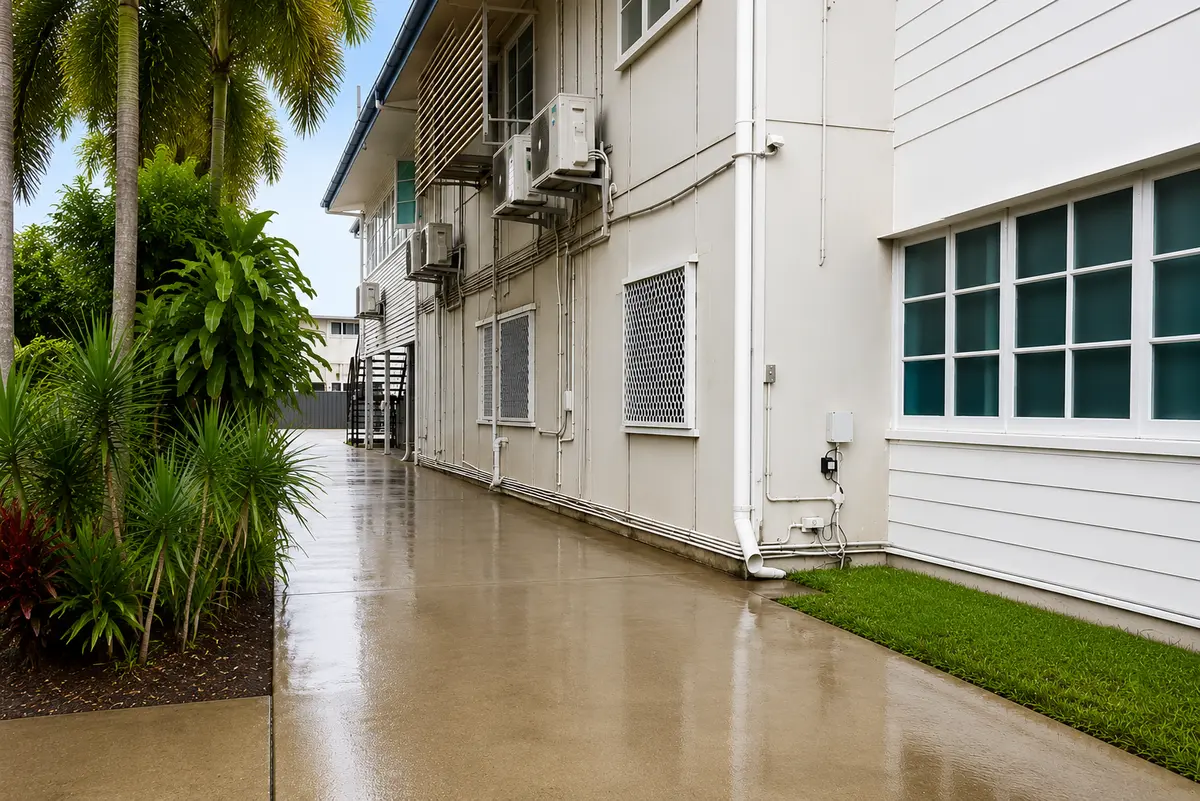
For strata managers, body corporate committees and commercial property managers, the outside of a building is the first thing tenants, owners, customers and visitors see. In Townsville, keeping that exterior presentable is an ongoing job. Humidity, wet season rain, dust and salt air all leave their mark on render, cladding, walkways and roofs.
Soft washing has become the preferred way to clean many multi-unit and commercial buildings because it removes organic growth and grime without the risk of damaging paint, coatings or seals. But on a larger site, getting a great result is about more than the cleaning method. Planning, access, safety and communication matter just as much.
This guide walks property managers through how to plan a soft wash on a strata or commercial property in Townsville, from the first site assessment to keeping the building presentable year-round.
Why Soft Washing Suits Larger Buildings
Multi-unit and commercial buildings often have a mix of surfaces that do not respond well to high pressure:
- Painted and textured render
- Fibre cement and composite cladding
- Powder-coated aluminium, window frames and balustrades
- Signage and shopfronts
- Metal and tiled roofs
- Shade sails, awnings and covered walkways
High-pressure washing can strip paint, damage coatings, force water into window seals and behind cladding, and leave visible lines or patches across large walls. Soft washing uses low pressure and professional cleaning solutions to break down mould, algae, lichen and grime, then gently rinses them away. The result is a more even finish across large facades and far less risk of surface damage or water getting where it should not.
Step 1: Start With a Site Assessment
Every building is different, so the first step is a walk-through with your cleaning contractor. A good assessment should cover:
- Surfaces and finishes: what each area is made of and how it should be cleaned
- Problem areas: shaded walls, stairwells, carpark entries, bin areas and spots with heavy mould or rust staining
- Access: building height, roof access points, balconies and any areas that need elevated work platforms or rope access
- Sensitive areas: gardens, pools, outdoor dining, signage, plant equipment and vehicles
- Water and drainage: where rinse water will flow and how it will be managed
- Existing damage: cracked render, peeling paint or failed sealant that should be noted before work begins
This is also the time to agree on the scope, whether that is the whole building, specific elevations, common areas only or a staged program.
Step 2: Plan Around the People Who Use the Building
On residential strata and commercial sites, disruption is the biggest concern. Good planning keeps everyone on side.
Schedule around activity. For commercial and retail sites, work can often be planned for early mornings, quieter trading days or outside business hours. For residential complexes, staging the work by block or elevation helps residents keep using the building.
Give clear notice. Residents and tenants should know when work will happen, which areas are affected and what they need to do. A simple notice in common areas and lifts, plus an email or app message where available, avoids most complaints.
Ask occupants to prepare. Typical requests include closing windows and doors, bringing in washing, moving pot plants and outdoor furniture away from walls, and keeping pets inside.
Manage carparks and walkways. Vehicles may need to be moved from certain bays, and some walkways may be temporarily closed or redirected while work is underway.
Step 3: Make Safety Non-Negotiable
Exterior cleaning on larger buildings involves working at heights, wet surfaces and cleaning solutions in shared spaces. Before work starts, property managers should confirm:
- The contractor holds appropriate public liability insurance
- Safe work method statements are provided for the job
- Height safety equipment and access methods suit the building
- Work zones will be clearly marked and barricaded where needed
- Gardens, pools and sensitive areas will be protected
- Rinse water and cleaning solutions will be managed responsibly to protect stormwater drains
A professional contractor will be happy to provide this information up front. If they are not, that is a red flag.
Step 4: Clean Each Surface the Right Way
The best results on large sites come from matching the method to the surface:
- Walls, render and cladding: soft washing to remove organic growth and grime without damaging finishes
- Roofs: low-pressure soft washing to treat lichen, moss and black streaks
- Eaves, soffits and stairwells: soft washing to clear cobwebs, mould and dirt in hard-to-reach areas
- Concrete paths, carparks and bin areas: pressure cleaning, often combined with treatment for oil, rust or heavy staining
- Signage and shopfronts: gentle cleaning to protect lettering, glass and powder coat
Combining soft washing with targeted commercial pressure washing for hard surfaces means every area is cleaned effectively without one method being forced onto every surface.
Step 5: Build a Maintenance Program
One-off cleans fix today’s problem. A maintenance program keeps the building looking its best and makes life easier for the committee or manager.
A typical program might include:
- A full exterior soft wash on a regular cycle, timed around the wet season
- More frequent attention for high-traffic areas such as entries, walkways and bin rooms
- Roof and gutter checks before the wet season
- Spot treatment of shaded elevations where mould returns first
- A short condition report after each visit noting any maintenance issues spotted, such as cracked render, failed sealant or blocked downpipes
Regular cleaning also gives you an early warning system. Problems with drainage, paint failure or water damage are easier to spot on a clean building than one covered in grime.
Questions to Ask Your Soft Washing Contractor
Before engaging a contractor for a strata or commercial building, ask:
- Do you have experience with multi-unit or commercial buildings of this size?
- Can you provide insurance details and safe work method statements?
- How will you access high areas and roofs safely?
- How will you protect gardens, pools, vehicles and residents?
- How will rinse water and cleaning solutions be managed?
- Can you work around our trading hours or resident needs?
- Can you provide before and after photos or a short report after the job?
The answers will tell you a lot about how professionally the job will be run.
Conclusion
Soft washing is one of the most effective ways to keep strata, body corporate and commercial buildings in Townsville looking clean, safe and well cared for. It removes the mould, algae and grime that North Queensland conditions bring, without putting paint, cladding and seals at risk. With a proper site assessment, clear communication, strong safety practices and a regular maintenance program, it can be done with minimal disruption to the people who live and work in the building.
K&A Pressure Washing works with property managers, body corporates and business owners across Townsville and surrounding suburbs. Get in touch with our team to arrange a site assessment, or see examples of our work.
Frequently Asked Questions
Is soft washing suitable for multi-storey buildings?
Yes. Soft washing is well suited to multi-storey residential and commercial buildings because it uses low pressure and can be applied safely to large areas, including upper levels, with the right access equipment and height safety measures.
Will residents or tenants need to leave during a soft wash?
Usually not. Residents and tenants are normally asked to close windows and doors, move items away from walls and avoid work zones while cleaning is underway. Staging the work by area helps keep the building usable.
How often should a strata or commercial building be soft washed in Townsville?
It depends on the building, its surroundings and how much shade and moisture it is exposed to. Many Townsville properties benefit from a regular cycle timed around the wet season, with more frequent attention for high-traffic or heavily shaded areas.
Can soft washing be done outside business hours?
In many cases, yes. Work can often be scheduled for early mornings, weekends or quieter trading periods to reduce disruption to customers and staff.
What should a body corporate prepare before a soft wash?
Confirm the scope, share safety documents with the building manager, notify residents in advance, arrange vehicle movements if needed and make sure the contractor has access to water, power and any locked areas.
